Tuesday, May 16, 2023

How many Square Feet Is Your Lawn? Beds?

                                                 Awesome Product Especially With These Winds
 

Horticulture Hotline 05/16/23

By Bill Lamson-Scribner


This weather is crazy. I can’t decide whether to run the heat or the air conditioner! This type of weather is why our grass cannot decide whether to stay dormant or to grow. The dry, windy weather has made the environmental conditions part of the ‘disease triangle’ less of a factor, so disease has been less of an issue. Less mosquitoes so far, but so recent high tides might change that. Mosquitoes are weak flyers so the winds have helped a lot.


With this crazy weather, it is a good time to go through your irrigation (or get a professional go through it) and make sure it is going to be ready to go for another year. In Possum’s we regularly get asked, “how much should I run my irrigation?”  Unfortunately, there is no easy answer to that question – maybe a future Horticulture Hotline! An inch of water a week is a decent rule of thumb. With the wind and new leaves being formed, I might go a little higher. Having the ground moist to an 8-inch depth is another rule of thumb. Using wetting agents is a big plus!


Knowing the square footage of your grass areas and bed areas are key to applying any fertilizer or control product correctly. Whenever we sell a bag of fertilizer at Possum’s we are going to ask, “how big is your yard?” We need to know if you need one bag or more than one bag. Some of our bags might be able to treat your yard twice. That is nice to know because that cuts the price per application in half, and lets you know you still have product waiting in the garage for your next application (like finding that McDonald’s French fry at the bottom of the bag). With the nice weather we are having, now is a great time to get out there and measure the yard.


I can remember several times hearing different variations of this same answer to my question while at the counter at Possum’s. “How many square feet is your yard?” Rough answer,” well, last year I put out that bag that covers 5000 square feet and it was perfect for my yard, so I must have 5000 square feet.”  Sorry, wrong answer.


Based on a pound of nitrogen, we sell 50-pound bags that cover as much as 23,000 square feet and as little as 1000 square feet. Unfortunately, the bag does not know the size of our yards or how fast we walk.


In the old days, yards were mostly square or rectangular, and they were easy to measure. Now most yards have curvy bed lines that sweep across the landscape, making them more difficult to measure. If you can break the yard up into little squares or rectangles, and measure the length and the width then you can get your square footage. Length multiplied by width will give you your square footage. Add up all the squares and rectangles that you measured the square feet of, and you will come up with the square footage of your yard.


If this sounds like total “Greek or Geek” to you, ask a landscaper, a realtor, a landscape architect, someone that works with floors or carpets, an engineer, a construction worker, someone who pours driveways, or anyone else that regularly needs to measure the square footage of something to help you. Some golfers are good at pacing off areas. Your plat map from when you purchased your house might help as well.


Now, there are even websites that you can log onto and they will tell you the square footage of your yard. Of course, I like to do it the old fashion way – length times width.


I know this measuring seems like a pain, but most of us stay in a house for several years or decades. A little pain spread over several years of having very useful information is worth it.


Once you measure the yard, put the measurements in about 5 to 10 locations throughout your house, your car (so you have it with you when you go to buy product) and the garage, so you do not lose them. Come into the camera phone age and take a picture of the measurements so you have the information when you come into the store. I have learned over the years that I put information like that in one “special place” so I do not lose the information. I then forget where that “special place” is!

 

Tuesday, May 9, 2023

Trees verses Grass

                                                       Wetting Agent
                                             Fire Ants
                                                        Mosquito - bad mistake!


Horticulture Hotline 05/09/23

By Bill Lamson-Scribner


The wind, cool nights, and lack of rain has been brutal this year especially for zoysia grass. The nights are finally getting warmer, so hopefully, with a little water all will be green soon!


The question I have been asked the most this year revolves around dying grass (other than moles – moles always top the list). The answer has always involved too much shade. Trees generally grow a bunch and put on a lot of leaves every year, and as a result, grass suffered due to lack of sunlight and competition.


The other day some was showing me a picture of their dying grass and I could see a young tree in the picture probably 30 feet tall. In the conversation it was revealed that the tree was only 10 feet tall when they purchased the house – there’s your answer- and I’m sure you had beautiful grass there when you moved in 5 years ago.


For the most part all the grasses around here like full sun – yes, even St. Augustine (or Charleston grass) prefers full sun. St. Augustine (or Charleston grass) prefers full sun; however, can tolerate shade better than some of the grasses. Most PHD doctors agree that even St. Augustine requires six hours of direct sunlight to provide a healthy stand of grass.


The statement I hear the most is something like this, “I just replaced this grass in the Spring.” This scenario is very common because you replaced the grass because it died due to shade and now the new grass is dying because of shade issues. The trees in this area have grown like gangbusters this year and the grass has been unable to capture the sunlight with its chlorophyll and produce the needed carbohydrates to establish a healthy stand of turf. 


On side yards, trees grown between houses and the houses themselves block a lot of the sunlight. Side yards are often very narrow, so all the foot traffic is concentrated into a small area. Water from the houses is often directed to flow between the houses. A combination of traffic, extra water and shade is deadly to most grass. Mulch, blue stone, oyster shell, or some other footpath and a drainage system might be a good winter project for this area.


Some solutions to these situations could be to grow heat tolerate ryegrass. Ryegrass grows very good here especially in shady areas.


Redesign beds that were put in years ago while the trees were small, making more beds and less grass. Healthy green grass bordered by mulch is a nice look.


Remove shrubs and trees that are shading your turf, if zoning allows. If your landscape has become over mature, maybe you can transplant some shrubs or small trees.


Grow grass in these areas and plan to replace it as needed and not feel bad about it. Regularly trim your trees in this area and not feel bad about it. Sometimes we are kind of stuck with the landscape we have. Growing grass as an annual that you change out yearly is all you can do in some situations if you like grass. I know several properties that grass is replaced every year because of oak trees.


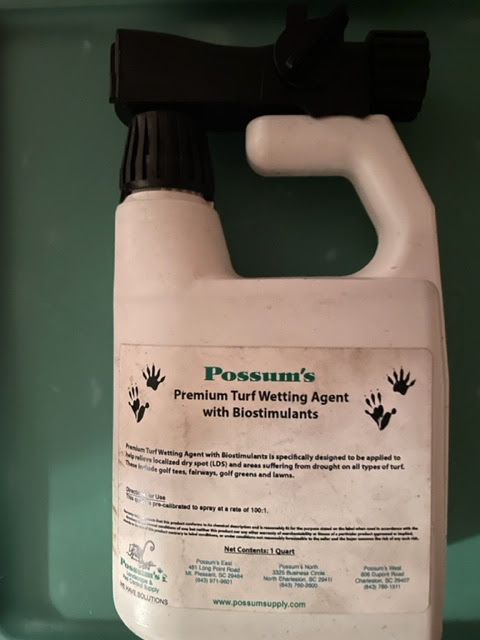
With these drying winds we have had, we have had a lot of success stories from people that have tried our wetting agents with biostimulants. Moles have had their babies so look for increased activity – great. Mole crickets are mating – lovely. The warmer nights seemed to have activated the fire ants,mosquitoes, and fleas – wonderful. Make it a great day!


Always read, understand, and follow product label. The product label is a Federal Law.


Monday, May 1, 2023

Spring "Itch" Planting

                                            Please no bark mulch on Trunk of Tree


Horticulture Hotline 05/01/23

By Bill Lamson-Scribner


Fall is for planting and transplanting; however, it is often spring when people get the “itch” to plant. Annuals and perennials especially. Just go by any place that sells plants and you will see the plants and potting soil headed out the door!


Here are a few products that will make a big difference for you. Test soil first, if possible. Amend your soil according to soil test with these additives. Wait 15 days and test soil again to be sure you have the nutrient levels where you want them. Wait 15 days to plant, if possible - not necessary. Since the soil is where the plant gets its nutrition, these steps are very important for a successful landscape.


Amend whole area not just the hole! With clay especially. I have witnessed many plants and trees where the soil was amended in a hole of clay. The clay acts like a bowl holding the water in the amended area around the roots, killing the plant or tree. With trees and shrubs do not till deeper than the root ball of the plants you are planting. Once the amendments settle you do not want your plant planted too deep.  This recipe is based on per 100 sq. ft. of planting area:

·         Turface – 200 lbs. per 100 sqft.  Turface is super-heated calcified clay.  Turface helps improve drainage and reduces compaction.  Turface will last in the soil for over 20 years.  The particle can hold its weight in water and then releases it slowly as the plant needs it.  We have used this product to correct many water issues (too wet and too dry – it is like a thermos knows whether to keep dry or wet) over the years.

·         Bolster 04-04-04 Sustane – 2.5 lbs. per 100 sqft.  This product increases fertilizer efficiency and improves soil biology.  It contains mycorrhiza spores increasing the ability for the roots absorb nutrients and water. Also contains biostimulants and iron.

·         SeaHume – 1.5 lbs. per 100 sqft. Humic acid and seaweed. Super product for establishing plants. Stimulates growth of beneficial microorganisms and root growth. Over 60 minor nutrients, carbon, amino acids, gibberellins and much, much more.  

·         Cotton Burr Compost – (4) 3 cu.ft. bags per 100 sq.ft. (sandy soil, increase to (6) bags).  Cotton Burr Compost is nature’s perfect soil conditioner.  The cotton boll (burr) is full of nutrients and will not tie up nitrogen like wood and wood-based soil amendments.  It will loosen up clay soils and add water holding capacities to sandy soils (also like a thermos!).  Cotton Burr is an excellent food source for beneficial soil organisms that help make nutrients available to plants, aerate the soil and helps keep harmful organisms and diseases in check. 

·         Nature’s Blend – (5) 1 cu.ft. bags per 100 sqft (in sand, increase to (8) bags).  This product not only contains Cotton Burrs, but also composted cattle manure, humates and alfalfa meal.  Alfalfa meal is high in nitrogen and contains Triacantanol, a natural root growth enhancer, and may help in the suppression and control of certain fungal diseases.

·         Diehard Transplant – inoculates soil with beneficial fungi, bacteria, and Trichoderma. Seaweed, humic acid, wetting agents and root promoting vitamins, and amino acids. Put Diehard Transplant in direct contact with the root system, so the mycorrhizal fungi will colonize the roots quickly.


Mix these products together and till into 6-8 inches of soil – not deeper than the root ball of the plant you are planting.  With clay soil, you should have 1/3 amendments and 2/3 clay.  With sandy soil, it should be ½ amendments and ½ sand. For trees and shrubs adjust depth according to root ball size.


After tilling the bed, top dress with (4) bags of Natures Blend and then (2) bags of Cotton Burr Compost. For annuals cap it off with one pound of 17-00-09. Plant annuals through this topdressed area. With this mixture, every time you water your plants are getting a “compost tea” full of nutrients.


Never pile mulch up around the base of trees or shrubs and be sure to break up the root ball if it is coming out of a container – sure eventual death.


Always read, understand and follow product label. The product label is a Federal Law.

                                            Break up Root Balls so the plants are not dead by the road