Wednesday, April 5, 2023

Viburnum Disease Explodes Like the Amaryllis


Horticulture Hotline 04/05/23

  Bill Lamson-Scribner


One thing about living in the Lowcountry, when something happens in the garden, word spreads fast. Last Friday I was asked to look at some Viburnum and the first call into “The Garden Clinic” was about the same disease. The very windy, hot, low humidity days triggered a disease that exploded by quickly drying out the soil.


Botryosphaeria Dieback and Canker has created quite the buzz in the area. Many of the Viburnum I have looked at were used as hedges and leaves and debris had built up at the base of the plant leading to adventitious roots growing in the debris. These adventitious roots “take over” for the main roots, that grow in soil, and dry out very rapidly. Pruning out the dead (sterilize your pruners and spray the wounds with T-Methyl) and getting the plant as healthy as possible (remove, debris build-up, water, fertilize according to soil test) will help them out-grow the damage.


Alright, let’s go to something fun! Amaryllis is one of the most beautiful flowers in the garden!  The huge flower and big bulb almost make them look like fake plants. They are such a showy plant I think some people are afraid to grow them. You can also extend their color by forcing them in the off season or just leave them in the ground and enjoy them in the spring. Boy they really put on a show and are easy to grow! When I see an amaryllis, I think of one person – Rudy Lane!


After your foliage has died back, you can dig the bulb out of the ground.  

Amaryllis is unique in that they do not respond to photoperiod (light hours received).   This makes Amaryllis easier to force than Poinsettias that you have to bring in an out of a dark closet in order to get them to turn red.  You do not have to regulate the light hours the Amaryllis bulb receives.  All you have to do is hold back the moisture (i.e. no water or fertilizer for 8-10 weeks).  While holding the water back, you can put them in a cool dark place away from any direct light and forget about them.   Since Amaryllis originated in the tropics of South America you also do not need to worry about cooling requirements (i.e. no bulbs in the refrigerator next to your lettuce!).    


Once you have dug the bulb up from your yard, you want to plant the bulb in a pot with well drained soil.  Equal amounts of peat moss and perlite should provide you with a good growing medium.  Do not use a pine bark medium.  Be sure the pot has good drainage.  Usually, a 6-inch pot will do for each bulb.  Ideally your pH would be between 6.0-6.5.  When placing the bulb in the peat/perlite mix have at least a third to a half the bulb above the surface.  This will help reduce a disease called fire or red spot that is caused by having the nose of the bulb wet.  When watering, avoid watering the nose of the bulb.   You want to wait until the plant has leaves before you fertilize or you could rot the roots.    


While your bulb is resting, check on it after 4 weeks and look for new growth at the top of the bulb.  Sometimes it doesn’t take the full 8-10 weeks.  If the bulb starts to grow, you can bring it out into the light and begin to water and fertilize it.  Fertilize every other week with a 20-20-20 fertilizer and in about 6 weeks you should have a new flower.


If you really like amaryllis and all the colors they come in, you could stagger (buy or dig some bulbs in week or 2-week intervals) force them, and have a perpetual supply of blooming amaryllis throughout the year!   


Always read, understand, and follow product label. The product label is a Federal Law.


Monday, March 27, 2023

March Checklist


Horticulture Hotline 03/27/23

By Bill Lamson-Scribner


If you have been waiting for the weather to warm up, here is a brief checklist of things that should have been completed around the yard:

·         Test soil. You might be wasting your money. Over fertilizing or under fertilizing could affect your landscape. Soil test provide valuable information for accurate fertilizing! Consider a custom program (Possum’s), especially if you are new to the area. Charleston is a difficult place to grow grass compared to most areas of the USA. Long growing season for weeds to germinate, critters, fungus, and the grass here is not that easy to establish from seed.

·         Have you applied SeaHume G to lawn and beds for a healthy start? The catalyst to make your fertilizers work better.

·         Have you fertilized your trees and shrubs? No soil test? Try 17-00-09.

·         Have you applied a preemergent to lawn and beds (this late use Dimension if it is your first application)? Remember it is never too late to start a preemerge program. With our mild climate weeds germinate almost every day of the year. It is never too late to start a preemergent program. Once you have put out a preemergent product, new small seeded annual weeds will stop coming up. Some weeds might have come up already, so you kill them and you should not have new weeds replace them. Read and follow product label.

·         Have you drench Dominion around plants with a history of insect problems?

·         Have you applied a preventive fungicide to turf if you have a history of fungus (T-Methyl, Strobe G)? We had a wet winter.

·         Mole Crickets overwinter as adults and do their mating flights right now. Have you killed them now before they can make new babies and increase the population? Be sure your lawn and beds are free of fire ants (always but especially with Easter egg hunts coming up), and if you have pets, fleas and ticks should be controlled. If you live near the woods, chiggers may be an issue. (Granular Sevin will work on these pests. If you prefer organic, check with a Possum’s near you to find a product or products that will work in your situation.)

·         Have you gone through your irrigation system to be sure everything is operating correctly? In my travels through the Lowcountry, I have noticed many broken heads (geysers) and heads that are spraying into the street. Although they have been calling for rain, where I live, we have had very little. These low humidity days will dry out your grass and plants quickly. Plants and grass are putting out new leaves and need water! Wetting Agents will help get the water into the soil.

·         The little fury terrorist of the yard is having babies now. Have you killed a mole recently or at least repelled one out of your yard?

·         Is your lawn mower ready for another season? New Blade? New Air Filter? New Spark Plug?

·         Have you measured your turf and bed areas so you know how much product you need to buy and apply to your yard? Getting the right amount of product on your lawn will determine the success of your efforts.

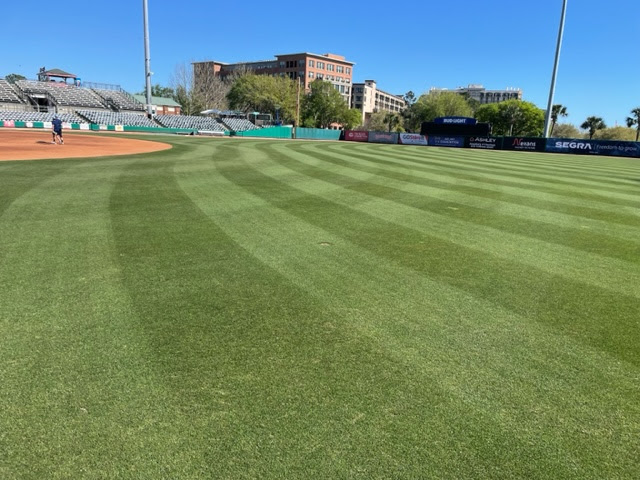
·         Take time to enjoy the Gardens, baseball, softball, and soccer.


Always read, understand, and follow product label. The product label is a Federal Law.


Monday, March 20, 2023

Get Ready To Aerate

                                                      Two Great Products in One Bag
                                                      Nutrition and a Great Hotel For Microbes
                                            Stunning Japanese Maple

Horticulture Hotline 03/20/23

By Bill Lamson-Scribner


Although it is not time to aerate your landscape, as the night time temperatures warm up and the grass starts to actively grow, aerating should be considered for the health of your whole landscape. Wet soils compact way more than dry soils, and we have had our share of wet soils. While you have the holes open in your yard, there are many products that you can add to that root zone area that will benefit your turf, trees, and shrubs.


Aerating reduces compaction, reduces thatch, increases oxygen movement to the roots, makes a better environment for earthworms, brings beneficial microorganisms to the surface, cuts runners, and allows better penetration of water, fertilizers, or control products into the soil. Increasing water penetration means less runoff into stormwater drains and erosion. Many people associate aerating with lawns only; however, it is great for the whole yard!


Right after aerating, while the holes are open, is a good time to add SeaHume G, BGK 7500, products containing mycorrhiza, Crab Shell, Turface and/or Cotton Burr Compost.  Even if you are not aerating, these products are great to add to your lawn and beds.

·         SeaHume G is a bio-stimulant humic acid product that will help your roots grow, soften up the soil, feed beneficial micro-organisms in the soil, make nutrients that are in the soil more available to the plants, and keep fertilizer from leaching. SeaHume G also contains 10% cold water seaweed. The seaweed also acts as a bio-stimulant and is a source of over 60 minor elements, amino acids, and natural chelating agents.

·         BGK 7500 is a granular organic product that has thatch eating bacteria mix in with a 03-03-03 fertilizer. BGK 7500 is also fortified with 6% humic acid.

·         04-04-04 Bolster and other products that contain mycorrhiza. By applying these products while the roots are exposed, the mycorrhiza can attach to the roots quickly. These friendly fungi will help the plant absorb water and nutrients from the soil while competing with bad fungus in the soil.

·         Turface can last about 20 years in the soil and help manage moisture.  This is a clay product that has been super-heated until it pops!  This makes this product sterile as well as turns it into a little capillary.  This capillary holds water and then releases it as the plant needs it.  This product is used on baseball infields to manage the moisture levels in clay; otherwise, the clay would be rock hard or moist and slimy. Turface will also keep fertilizer and water from leaching in sandy soils. Turface is great for wet or dry areas (like a thermos knows whether to keep something hot or cold).

·         Cotton Burr Compost will add water holding capabilities to the soil by adding organic matter to the soil.  Cotton Burr Compost will soften up clay as well as giving sandy soil nutrient holding capacity.  Cotton Burr Compost is very high in nutrition and will also help increase populations of beneficial organisms in the soil.


All the above products will help conserve moisture as well.


Always read, understand, and follow product label. The product label is a Federal Law. Measure your landscape, so you know how much product to use.