Monday, February 20, 2023

Rain - Too Much or Too Little

                                            State Flower - Carolina Jasmine - Bees Love It!
                                                      Cotton Burr Compost - early runners -

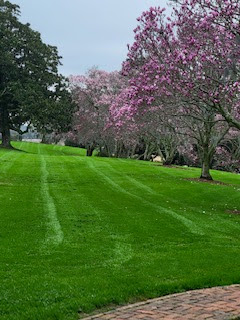
                                                       looks like blades of mower need sharpening

                                                     Wet Winter Brings Turf Disease
                                                   

Horticulture Hotline 02/20/23

By Bill Lamson-Scribner


We have had an exceptional amount of rain this winter. I see puddles that never dry! It is not good to play sports on wet grass. When the ground is wet, it compacts easier and the grass gets damaged. Managing water is very important for the health of your house and landscape.


Starting with gutters, do you have them? Do you need them? Are they clean and functioning properly? Are your gutters a breeding ground for mosquitoes? If water is running off your roof and draining under your house (crawl space), you may want to consider gutters. Moisture underneath a house can led to mold, fungus, moisture damage and termites. Homes without gutters often get rot around windows when the water runs off the roof and splashes off of plants back onto the house.


If you have gutters, are the plants near the downspouts drowning? Do you need to put a piece of flexible pipe on the end of the downspout and direct the water to a place in the yard where it is not a problem? Could you collect this water in a rain barrel and store it for future use?


A large low area in the yard could be dealt with in many ways. Find the lowest point and put a drain and run the water elsewhere. If there are not any tree roots in the area, you could fill in the area with topsoil a little at a time so you don’t kill the grass. If the area is small enough, consider using bagged topsoil, so you do not bring a bunch of weeds in the soil to your yard. If the area is really big, you could remove the grass with a sod cutter and re-grade the area – adding drains if needed.


If you would like to drain an area very effectively and without having to do a lot of digging, then Turface is the way to go. All you need to do is aerate the area then apply Turface. If you don’t have an aerator, you can just spread the Turface along the surface. We have worked with many customers using this product in many different situations with great results. Turface will help drain large areas and small areas. Some areas that are bigger and wetter you can dig columns with a post hole digger or auger and backfill with Turface. You will also save on the water and fungicide bill with this product. Turface also helps with compaction.


Using wetting agents can also help get water off of the surface and into the ground.


Hot topics at Possum’s – pruning (what / when / how), moles, fungus, rats, preemergent products and timing (the time is now!), weeds (kill them now before they produce seeds for next year), custom soil tests…


Always read and follow product label. It is the law.


Monday, February 13, 2023

Things Are Happening


Horticulture Hotline 02/13/23

By Bill Lamson-Scribner


The Tulip Magnolia (Saucer Magnolia) is blooming in the Lowcountry.  The Saucer Magnolia has always been one of my favorites because of the time it blooms (late January / early February) and the fact that it blooms before the leaves emerge. It is time to be sure the winter projects have been completed, and the proactive spring projects in the yard and around the house have been completed.


Healthy trees grow 12 to 24 inches a year. Areas of grass might be shaded and thin that were once high-quality turf. Now, might be a good time to cut new bed lines and let the tree have more room to grow. Check the sides of your house for limbs rubbing the paint off of your house. The paint protects your house like your skin protects you or like bark protects a tree.


Look above your roof line and see if any limbs are growing above your roof that could allow varmints (squirrels, raccoons, or the loveable possum) into your attic. Make sure your source of power to your house is free of limbs. Hire an insured arborist if you need some pruning done.


Any transplanting or planting of new trees or shrubs should be done ASAP. Try to get them in the ground before the plant flushes out new growth or blooms. If you are buying a blooming plant that you want a specific color or to match a color you already have, you may have to wait; otherwise, the sooner you can plant the better. When planting, remember SUPERthrive Solid to help with survival of your new investment. SUPERthrive Solid has all the good stuff to get your plant off to a healthy start.

Remember the old saying when planting, “plant it high and it will not die!”


Intice 10 perimeter bait is a great product to put out around the perimeter of your house for roaches, crickets, sowbugs, earwigs, silverfish, millipedes and certain ants. Intice 10 is a LEED tier 3 product and N.O.P. (National Organics Program) compliant, so it is considered very safe.


Intice 10 should also be broadcasted in the yard for mole crickets. Since Over n Out changed the active ingredient away from Fipronil, mole crickets have become a major turf pest again. Mole crickets come to the surface on these warm days and love to eat this bait!


Judging from the flea products we have been selling at Possum’s, now would be a good time to get ahead of the fleas. Be sure to use a product with a growth regulator. Precor 2000, IG Regulator, Alpine Flea Insecticide with IGR are just a few products that will get you ahead of the curve.


Get out your preemergent, or forever fight weeds!! I usually wait until my bald cypress starts to “needle out” and then I go on an organic binge with SeaHume, Cotton Burr Compost, worm castings and others; however, this year I’m already seeing new growth on some plants so I guess it is time for the organics.


If you have a history with fungus or insects on certain plants, sanitation, lime / sulfur, and your fungicide or insecticide of choice is good to put out now to protect the new growth. With these rainy, cloudy, overcast days brown patch / large patch will be going crazy when the temperatures are right.


Spring in the Lowcountry… Notice the gnats come out whenever we have a nice afternoon?


Always read, understand and follow product label. The product label is a Federal Law.


Monday, February 6, 2023

Crepe Myrtles

                                            Beautiful Small Tree - Crepe Myrtle
                                            Murdered Crepe Myrtle with too much mulch
                                           Murdered Crepe Myrtle Shadow Makes Devil's Fork


Horticulture Hotline 02/06/23

By Bill Lamson-Scribner


The question about pruning Crepe Myrtles and other plants seem to top the list of questions for this week. The butchers are out there! The time is now for getting in your soil test, so you can amend the soil by spring time. Do you have any disease prone plants (roses, etc.) that could benefit from a little sanitation? Have you pruned your roses? What is the population of moles in the Lowcountry? What is the population of moles in your yard? Have you applied Neem Oil for overwintering insects and disease? Have you controlled those little winter weeds popping up everywhere? Kill them while they are young and before they produce seeds for next year. It is a great time to apply organics around trees and shrubs, so they will have the nutrients for the new growth that they are about to experience.


Crepe Myrtles are the most abused tree in the landscape. Since they bloom on new growth, someone “topped” them a while back and notice the flush of new growth and the prolific blooms. These heavy blooms are supported by wimpy 18 – 24-inch sprouts that just developed that growing season and are the diameter of a pencil. When it rains, the bloom catches water and becomes even heavier. The bloom will hang down and eventually the wimpy new growth supporting the bloom will split off tree leaving an open wound for insects and disease.


Instead of “topping” the tree to increase blooms, a good fertility program will accomplish the same thing without ruining the beautiful natural branch structure of the tree. A soil test and program can guide you to the right fertilizer for your tree. Have you ever seen a Crepe Myrtle in the winter when the leaves are gone, and sense the tree’s embarrassment, like a dog with the cone on its head? A tree that has been “topped” is standing there naked of any foliage with these big nasty swollen knobs at the end of the branch, like huge warts. The tree that is pruned correctly is standing there naked and proud, like a nude Greek Statue.


The correct pruning for a Crepe Myrtle involves removing dead limbs and crossing limbs. Any limbs growing toward the middle of the tree are good candidates for removal. If a limb is growing to the outside of the tree let it be. Opening up the center for sunlight penetration and air movement, is always a good idea to help prevent disease. Sometimes Crepe Myrtles, being a multi-trunk tree, can have too many canes growing from the ground, and one of these needs to be removed. Removing these canes is best done while the tree is very young; however, you can prune these canes out once the tree is older.


There is a very rare occasion that a landscape designer orders that a Crepe Myrtle should be topped. Under certain circumstances usually involving safety concerns or visibility concerns a designer will recommend keeping the tree at a certain height. When I worked on Hilton Head, we had a safety situation by a guard gate that required us to “top” the Crepe Myrtles; however, we did not “top” the other Crepe Myrtles in the project. Some businesses want their sign to be seen, and Citadel Mall is practicing pollarding, a type of severe pruning that the Crepe Myrtle and Sycamores can tolerate.


Now days, Crepe Myrtles are available in all different sizes from 3 feet to 30 feet, so planting the right one to fit the scale of your landscape is crucial. Much of this “topping” can be avoided with the proper plant selection and proper fertility. Whoever is planting the tree (or any plant) should look at its mature height and spread. Then plant the right plant for the space.


If you live in Mt. Pleasant, learn the local ordinances because they have laws about the proper pruning of Crepe Myrtles.


After you prune your Crepe Myrtle properly, now is the perfect time to add Cotton Burr Compost as a mulch, SeaHume as a biostimulant and minor nutrient treasure chest, and a tree and shrub drench for insect protection. Cotton Burr Compost and SeaHume will provide a wonderful, nutrient-rich compost tea every time it rains or you irrigate.   


Spring is coming. Preemerge?